
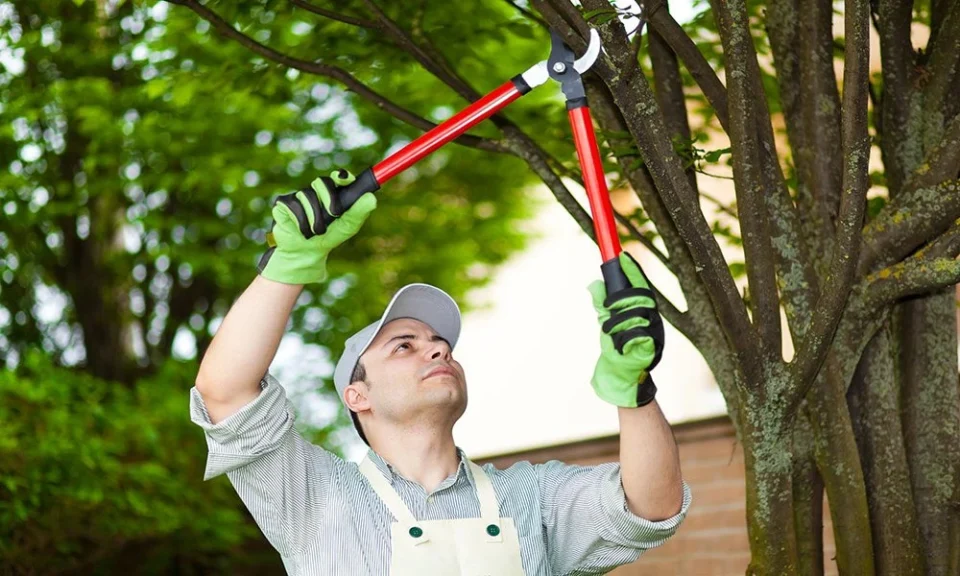
Tree pruning is the kind of maintenance that pays forward. A tree pruned well in its early years develops a structure that stays balanced, safe, and healthy for decades with minimal corrective work. A tree that grows unchecked in an urban garden eventually develops problems that are far more expensive to address than consistent pruning would have been – crossed branches rubbing each other to open wounds, unbalanced weight loading one side, dead wood accumulating in the canopy. The choice is between investing a little regularly or dealing with a crisis eventually.
What Pruning Actually Achieves
Tree pruning is not simply cutting branches to reduce size. Done by a trained arborist, it is a set of deliberate decisions about which branches to remove, where to make the cut, and what growth pattern to encourage going forward.
Dead and dying branches are the first priority in any pruning visit. Dead wood can fall without warning, and in Singapore’s urban environment, with gardens adjacent to driveways, walkways, and buildings, a falling branch causes real harm. Removing dead wood systematically is the most direct form of risk management available for mature trees.
Structural pruning addresses the balance and weight distribution of the canopy. Dominant leaders, codominant stems where two trunks compete for vertical dominance, and branches growing into buildings or power lines all represent structural risks that worsen with time. Correcting them early, while the branches involved are still manageable, is far less costly than addressing them once the tree has grown into the problem.
Crown thinning improves air circulation through the canopy, which reduces the pressure from fungal diseases common in Singapore’s humid climate. It also reduces wind resistance, which directly lowers the risk of branch failure during the storms that arrive throughout the year.
The Singapore Context for Tree Management
Singapore’s year-round growing season means that trees here do not have the natural pause that autumn and winter provide in temperate climates. Growth continues month after month, and the gap between pruning cycles is never filled by a natural period of dormancy. Tree pruning services provided on a regular schedule keep this continuous growth under management rather than allowing it to build into a structural problem.
The NParks Act and the Parks and Trees Act govern tree management in Singapore. Trees of a certain size on private land may require a permit before significant pruning or removal. Homeowners can refer to NParks guidance on tree pruning and permit requirements for current rules applicable to private property.
As the late Lee Kuan Yew, who championed Singapore’s garden city vision, once said, “A city’s trees are its living infrastructure, they must be managed, not merely enjoyed.” Tree pruning is how that management happens at the property level.
What a Professional Pruning Visit Involves
A qualified arborist will assess each tree before cutting, looking at the canopy structure, any signs of disease or decay, proximity to structures and utilities, and the specific work needed to address risks and improve the tree’s form.
Cuts are made at the correct angle and position relative to the branch collar – the natural tissue at the base of each branch that the tree uses to seal wounds. Cutting into the collar or leaving stubs creates entry points for decay that the tree cannot close. These are the details that separate professional arboricultural work from general garden cutting.
Once work is complete, the site is left clean. Chippings from smaller branches are often available for use as mulch if the client wants them.
Frequency Considerations
The right pruning schedule depends on the tree species, its growth rate, and its proximity to structures. Fast-growing species near buildings or power lines may need attention every six to twelve months. Slower-growing specimen trees in open space may only need structural checks every two to three years. Fruit trees have specific requirements tied to their productive cycle.
A good arborist will advise on the appropriate schedule for each tree on a property rather than applying a one-size-fits-all interval. Tree pruning in Singapore done at the right frequency for each species produces healthier, better-structured trees than a fixed calendar that ignores how each tree is actually growing.
The Investment That Grows Over Time
Trees reward consistent care. A tree that receives regular, professional pruning over ten years grows into a structural asset, well-balanced, safe, and attractive, rather than a liability requiring expensive corrective work or removal. For homeowners who value the trees on their property, establishing a pruning programme with a qualified arborist is the most practical investment available in their outdoor space.
